What We Offer
Degree Programs
B.Ed (Hons.)
Course Overview
Equips future teachers with modern teaching methodologies, strong subject knowledge, and essential 21st-century skills such as critical thinking, creativity, collaboration, and effective communication. The program emphasizes practical classroom experience, reflective teaching practices, and the integration of technology to ensure graduates can create engaging, inclusive, and student-centered learning environments. It prepares educators to confidently meet the evolving needs of today’s diverse classrooms and contribute meaningfully to the education sector.
Duration : 4 Years
ADE (Associate Degree in Education)
Course Overview
ADE leading to B.Ed (Hons.) Elementary is a transitional two-year program that focuses on contemporary pedagogical techniques, strong subject-matter knowledge, and the development of effective instructional skills. The program also nurtures teaching communication, creativity, and critical thinking, preparing future educators to meet the needs of modern classrooms with confidence and competence.
Duration:
2 Years
Programs Offered
Government Girls Elementary College of Education (W), Larkana offers a range of degree and professional development programs designed to prepare future educators and professionals with the knowledge, skills, and confidence to meet the challenges of modern education.
Short & Professional Courses
Early Childhood Care and Education (ECCE)
Course Overview
Equip yourself to support children’s early development and learning by applying play-based, research-backed teaching methods that cultivate 21st-century competencies.
1. Introduction to Early Childhood Education
- Overview of ECCE and its significance
- Principles of child-centered education
- Roles and responsibilities of an early childhood educator
- Historical perspectives and global best practices
2. Child Development
- Physical Development: Growth patterns, motor skills, coordination
- Cognitive Development: Thinking, reasoning, problem-solving, creativity
- Social and Emotional Development: Self-awareness, empathy, relationships, emotional regulation
- Language Development: Communication, early literacy, listening, and vocabulary
- Developmental milestones for ages 0–8
3. Health, Nutrition, and Safety
- Child nutrition and dietary needs
- Common childhood illnesses and preventive measures
- Immunization basics and child health monitoring
- Hygiene, sanitation, and maintaining a safe learning environment
- First-aid and emergency care
4. Curriculum Design and Pedagogy
- Developmentally Appropriate Practice (DAP)
- Play-based learning and experiential education
- Lesson planning and activity design
- Early literacy and numeracy development
- Integrating arts, music, storytelling, and creative play
5. Learning Environment & Classroom Management
- Designing child-friendly classrooms
- Organizing learning centers and materials
- Positive behavior guidance and classroom discipline strategies
- Creating inclusive learning environments
6. Creativity, Arts, and Play
- Visual arts, crafts, and sensory activities
- Music, rhythm, and movement integration
- Dramatic play and role-play for social and emotional skills
- Stimulating imagination, critical thinking, and problem-solving
- Organizing structured and free-play sessions
7. Communication and Parent Engagement
- Effective communication with children and families
- Conducting parent-teacher meetings
- Involving parents in learning and child development activities
- Community engagement and awareness initiatives
8. Special Needs and Inclusive Education
- Understanding developmental delays and disabilities
- Inclusive teaching strategies for diverse learners
- Individualized Education Plans (IEPs)
- Early intervention and support programs
9. Assessment and Professional Practice
- Understanding developmental delays and disabilities
- Inclusive teaching strategies for diverse learners
- Individualized Education Plans (IEPs)
- Early intervention and support programs
Learning Outcomes:
Upon completion of this 9-month course, participants will be able to:
- Plan and implement age-appropriate curricula for children aged 0–8 years
- Support holistic child development: cognitive, emotional, social, and physical
- Maintain safe, stimulating, and inclusive learning environments
- Engage parents and communities in early childhood development
- Conduct assessments, document progress, and implement reflective teaching practices
Canva – An introduction to Digital learning
Course Overview
This course introduces learners to Canva, a powerful digital design tool, and its applications in creating engaging digital learning content. Participants will learn to design presentations, infographics, worksheets, and other educational materials to enhance online and offline learning experiences.
1. Introduction to Canva
- What is Canva
- Overview of features and interface
- Setting up an account
- Navigating the Canva dashboard
2. Basics of Design
- Understanding design principles (color, typography, layout)
- Choosing and customizing templates
- Using Canva elements: images, icons, shapes
3. Creating Learning Materials
- Designing presentations for teaching
- Creating infographics for learning
- Making worksheets and assignments
4. Multimedia Integration
- Adding videos and audio to designs
- Using animations and transitions
- Embedding interactive elements for digital learning
5. Collaboration and Sharing
- Sharing designs with students or colleagues
- Collaborating on team projects
- Downloading and exporting designs in multiple formats
6. Practical Assignments
- Create a presentation on a chosen topic
- Design an infographic or worksheet
- Peer review and feedback session
7.Tips, Tricks, and Best Practices
- Time-saving features
- Using brand kits and templates for consistency
- Common design mistakes to avoid
Learning Outcomes:
By the end of this course, learners will be able to:
- Navigate Canva confidently and use both basic and advanced features
- Design engaging digital learning materials
- Integrate multimedia elements effectively
- Collaborate and share educational content efficiently
Introduction to Artificial Intelligence (AI)
Course Overview
This course introduces educators and students to the integration of Artificial Intelligence (AI) in classroom settings. Participants will explore how AI tools can enhance teaching, learning, and classroom management, fostering more engaging and personalized educational experiences.
1. Introduction to AI in Education
- Understanding AI and its applications in education
- Benefits and challenges of using AI in the classroom
- Overview of popular AI tools for teaching and learning
2. AI-Powered Teaching Tools
- AI tools for lesson planning and curriculum design
- Automated grading and assessment tools
- Adaptive learning platforms for personalized learning
3. Enhancing Student Engagement
- AI-driven educational games and simulations
- Intelligent tutoring systems
- Virtual teaching assistants and chatbots
4. Data-Driven Insights
- Using AI to analyze student performance
- Predictive analytics for early intervention
- Feedback and improvement strategies
5. Ethical and Responsible AI Use
- Understanding privacy and data security concerns
- Promoting equity and fairness in AI-assisted learning
- Best practices for responsible AI use in schools
6. Practical Assignments
- Implementing an AI tool in a lesson plan
- Designing a small AI-driven learning activity
- Peer discussion and reflection on outcomes
7.Future of AI in Education
- Emerging trends in AI and EdTech
- Preparing for AI-driven classrooms
- Continuous learning and professional development
Learning Outcomes:
By the end of this course, participants will be able to:
- Understand key AI concepts and their applications in education
- Integrate AI tools to enhance teaching and learning
- Analyze classroom data to improve student outcomes
- Implement AI responsibly, addressing ethical and privacy concerns
- Stay informed about emerging AI trends in education
- Explore career opportunities in AI
Use of AI in the Classroom
Course Overview
Learn the fundamentals of AI, including machine learning, neural networks, and real-world applications. This course introduces AI concepts, technologies, and ethical considerations for students and professionals.
1. Introduction to AI
- What is AI?
- History and evolution of AI
- Key terms: machine learning, deep learning, neural networks
2. Types of AI
- Narrow AI vs. General AI
- Reactive, Limited Memory, Theory of Mind, Self-aware AI
- Real-life examples
3. AI Technologies and Tools
- Machine learning basics
- Natural Language Processing (NLP)
- Computer vision and robotics
4. Applications of AI
- AI in healthcare, education, finance, transportation
- Virtual assistants, chatbots, recommendation systems
- Automation and decision-making
5. AI Ethics and Challenges
- Ethical considerations
- Bias, fairness, and privacy concerns
- Future challenges and limitations
6. Practical Assignments
- Identify AI applications in daily life
- Hands-on exercises with AI tools (optional)
- Case study discussions
7.Future of AI
- Emerging trends
- Careers in AI and machine learning
- Preparing for an AI-driven world
Learning Outcomes:
By the end of this course, participants will be able to:
- Understand AI fundamentals and evolution
- Identify types of AI and their applications
- Recognize AI technologies and real-world use cases
English Language Course
Course Overview
A comprehensive course designed to improve reading, writing, speaking, and listening skills. Ideal for students, professionals, and anyone aiming to gain fluency and confidence in English.
1. Introduction to English Language
- English as a global language
- Alphabet, pronunciation, and basic phonetics
- Greetings and everyday expressions
2. Grammar and Sentence Structure
- Parts of speech
- Sentence construction and punctuation
- Present, past, and future tenses
3. Vocabulary Building
- Everyday and thematic vocabulary
- Idioms, expressions, and phrasal verbs
4. Reading Comprehension
- Short passages and stories
- Understanding context, main ideas, and details
- Skimming and scanning techniques
5. Writing Skills
- Sentence and paragraph writing
- Formal and informal letters
- Basic essay writing
6. Listening Skills
- Dialogues, announcements, and talks
- Identifying key points and details
- Note-taking and summarizing
8. Practical Assignments & Assessments
- Writing exercises and comprehension quizzes
- Speaking and listening practice
- Final assessment covering all skills
Learning Outcomes:
By the end of this course, participants will be able to:
- Communicate effectively in everyday English situations
- Read and understand simple to intermediate texts
- Write clear sentences, paragraphs, and basic essays
- Improve listening comprehension
- Gain confidence in spoken English
7. Speaking and Conversation
- Pronunciation and accent improvement
- Everyday conversations and role-plays
- Public speaking and presentations
Learning Outcomes:
By the end of this course, participants will be able to:
- Understand AI fundamentals and evolution
- Identify types of AI and their applications
- Recognize AI technologies and real-world use cases
SEMESTER-WISE SUBJECTS
ADE / B.Ed (Hons) – Course Structure
ADE / B.Ed (Hons) – Part I, 1st Semester
| Sr. | Subject |
|---|---|
| 1 | Functional English-I (Compulsory) |
| 2 | Islamic Studies (Compulsory) |
| 3 | Urdu / Regional Languages (Content) |
| 4 | Child Development (Foundation) |
| 5 | General Science (Content) |
| 6 | General Method Of Teaching (Foundation) |
ADE / B.Ed (Hons) – Part I, 2nd Semester
| Sr. | Subject |
|---|---|
| 1 | English-II (Communication Skills) (Compulsory) |
| 2 | Computer Literacy (Compulsory) |
| 3 | General Mathematics (Content) |
| 4 | Classroom Management (Foundation) |
| 5 | Pakistan Studies (Compulsory) |
| 6 | General Method of Teaching (Foundation) |
ADE / B.Ed (Hons) – Part II, 1st Semester
| Sr. | Subject |
|---|---|
| 1 | Teaching Literacy Skills (Professional) |
| 2 | Arts, Craft & Calligraphy (Content) |
| 3 | Teaching of General Science (Professional) |
| 4 | Teaching of Urdu / Regional Languages (Content) |
| 5 | Instructional & Communication Technology (ICT) in Education (Professional) |
| 6 | Teaching Practice (Short Term) |
ADE / B.Ed (Hons) – Part II, 2nd Semester
| Sr. | Subject |
|---|---|
| 1 | Teaching of English-II (Foundation) |
| 2 | School, Community & Teacher (Foundation) |
| 3 | Teaching of Mathematics (Professional) |
| 4 | Classroom Assessment (Professional) |
| 5 | Teaching Social Studies (Professional) |
| 6 | Teaching Practice (Short Term) |
B.Ed (Hons) – Part III, 1st Semester
| Sr. | Subject |
|---|---|
| 1 | Educational Psychology |
| 2 | Foundation of Education |
| 3 | Curriculum Development |
| 4 | English-III (Technical Writing & Presentation Skills) |
| 5 | Foundation of Reading (Content-I, Reading) |
| 6 | Chemistry (Content-II, Science) |
B.Ed (Hons) – Part III, 2nd Semester
| Sr. | Subject |
|---|---|
| 1 | Contemporary Issues & Trends in Education |
| 2 | Reading Difficulties (Content-I, Reading) |
| 3 | Comparative Education |
| 4 | Introduction to Guidance & Counseling |
| 5 | Physics (Content-II, Science) |
B.Ed (Hons) – Part IV, 1st Semester
| Sr. | Subject |
|---|---|
| 1 | Research Methods in Education |
| 2 | Teaching of Reading (Content-I, Reading) |
| 3 | Reading Assessment (Content-I, Reading) |
| 4 | Teaching Science Pedagogy (Content-II, Science) |
| 5 | Biology (Content-II, Science) |
| 6 | Teaching Practice (Reading Practicum) |
B.Ed (Hons) – Part IV, 2nd Semester
| Sr. | Subject |
|---|---|
| 1 | Research Project |
| 2 | School Management |
| 3 | Advanced Practicum (Long Term) – 6 Credit Hours |
| 4 | Test Development & Evaluation |
Key Team Members
Miss Reshma Channa
Assistant Professor in GECE(W), Larkana
Masters of Education (M.Ed)
M.A in Sindhi
Tasneem Soomro
Assistant Professor in GECE(W), Larkana
Masters of Education (M.Ed)
Master in Arts – English
Bilquis Mughal
Lecturer at GECE(W), Larkana
Masters of Education (M.Ed)
Master in Arts – Economics
Khalid Bhutto
Assistant Professor in GECE(W), Larkana
Doctor of philosophy – Chemistry
Bachelor of Education (M.Ed)
Seema Channa
Lecturer at GECE(W), Larkana
Master in Arts -Urdu
Course Spotlight
Get an inside look at how future educators are being prepared for tomorrow’s classrooms.
Course Title : Art , Craft & Calligraphy
Course Title : Literacy Skills
Course Title :General Science
Administration
The Office of the Administration at Government Girls Elementary College of Education, Larkana is dedicated to serving students, faculty, staff, and the wider college community. It acts as the central hub for academic and administrative services and should be your first point of contact for guidance related to academic matters or student support.
The office works to uphold and implement academic policies, maintain student records, and ensure smooth academic operations. It also assists in the development and improvement of institutional procedures to better serve the college community.
Our Support & Services
Personalized support for admissions, courses, and academic planning.
Monitor and manage your attendance conveniently online.
Access and track your academic results anytime, anywhere.
Assistance in understanding requirements and staying on track
Resources and support for skill-building and short courses.
- Extra Ordinary safe & secure environment
Practicing School for hands on Training
Global Exposure & Access to Renowned Educationists
Smart Classrooms with Interactive Boards
Access to Teaching Licenses & Professional Pathways
Uninterrupted Power & High-Speed Internet
Talent Clubs for Every Passion
Indoor & Outdoor Activity Zones
Continuous Professional Development
Practice School
The college has an attached practice school affiliated with the Government Elementary College of Education (Women), Larkana. It provides quality education to students from Classes I to V. This school serves as a training ground for ADE and B.Ed. (Honors) student-teachers, allowing them to conduct teaching practice and gain valuable hands-on classroom experience as part of their professional preparation.
Facilities
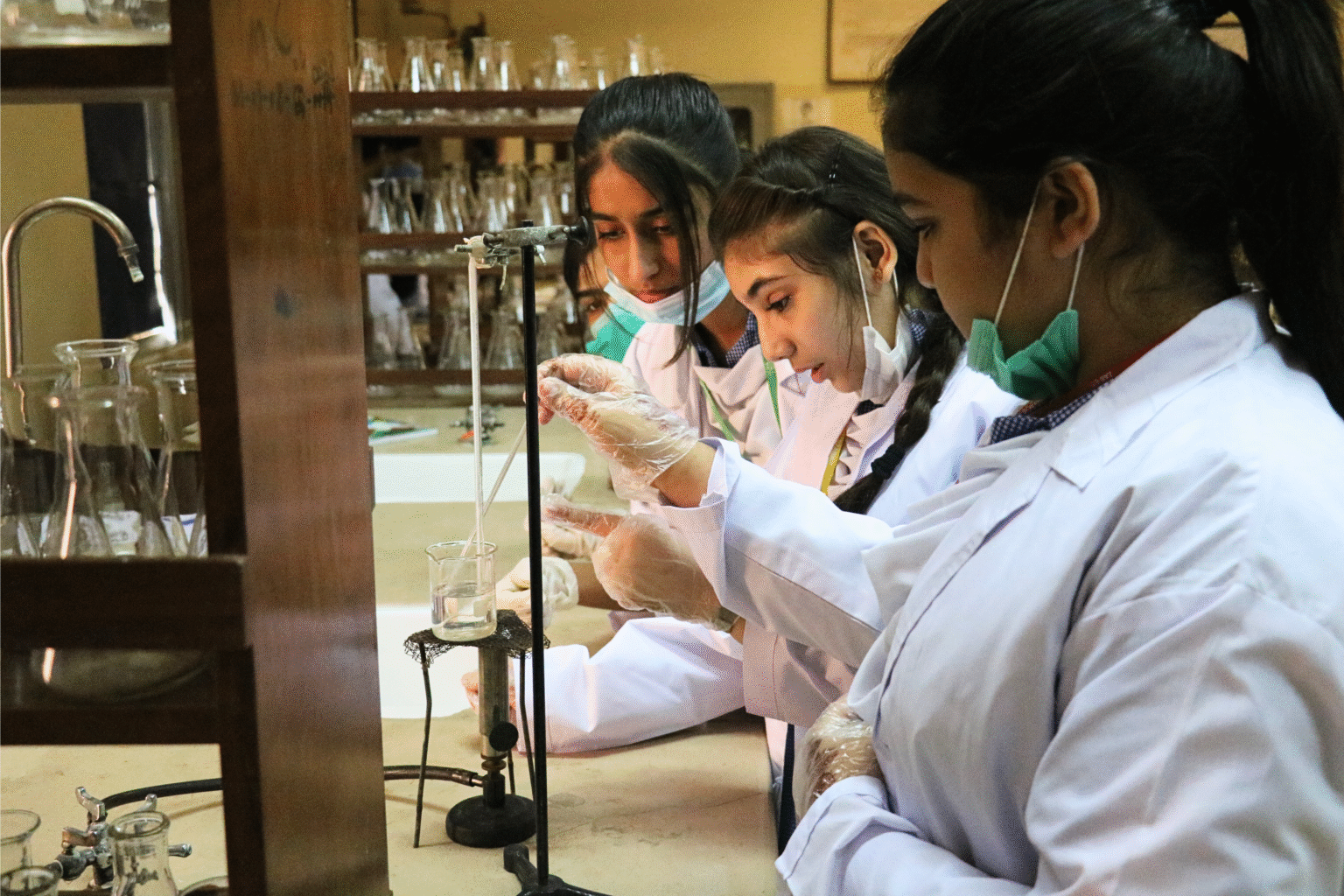
Science Laboratory
Experiments and practical work are the foundation of discovery and innovation. To encourage scientific learning and exploration, the college maintains a well-equipped Science Laboratory with all the necessary instruments and materials. It provides students with hands-on experience to connect theoretical knowledge with real-world applications.
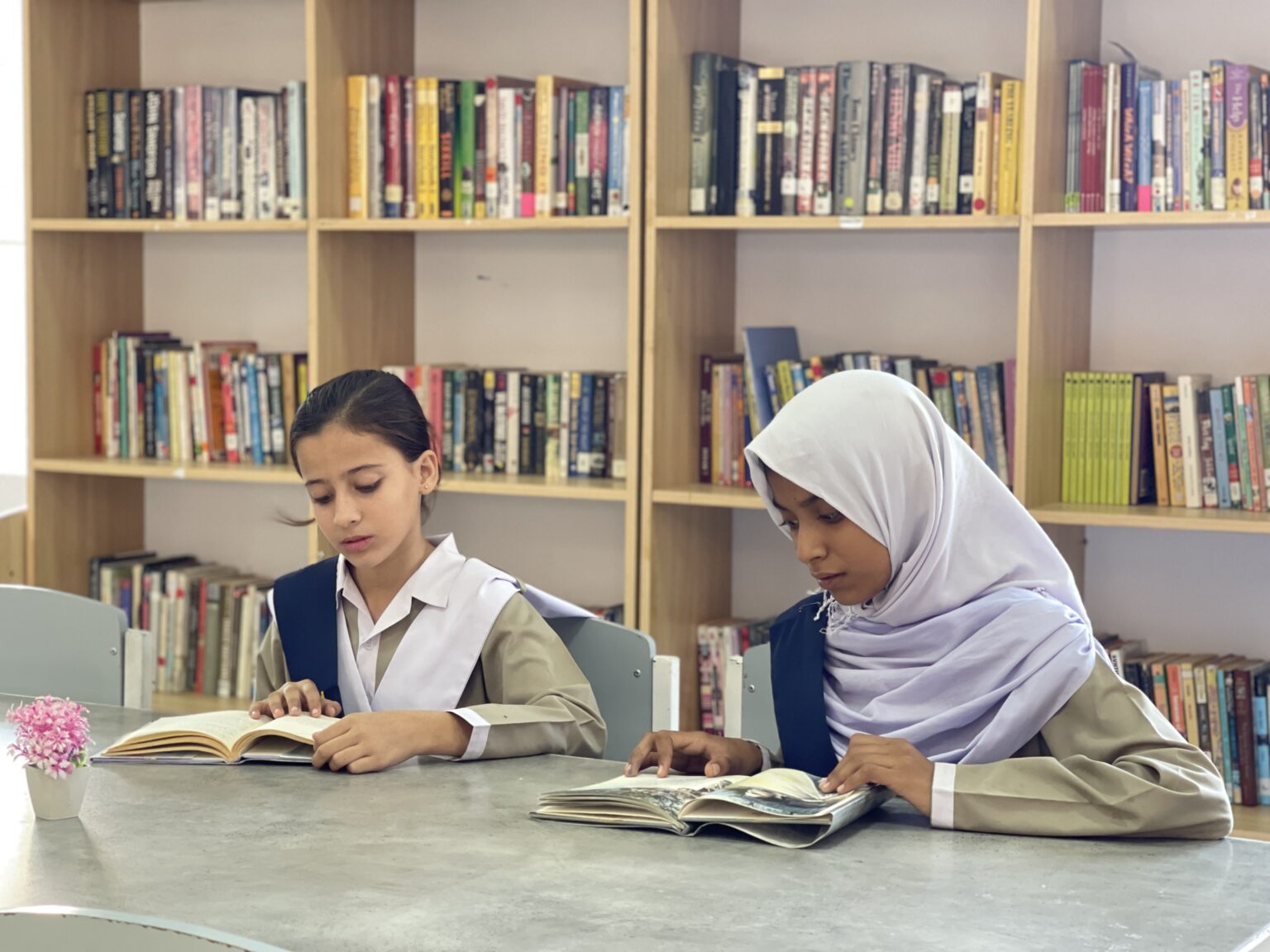
Library
The college has a well-furnished library equipped with a rich collection of over 1,000 books, including reference materials, subject-specific texts, and periodicals. The library provides a quiet and resourceful environment to support both students and teachers in intensive and extensive reading, research, and academic assignments.
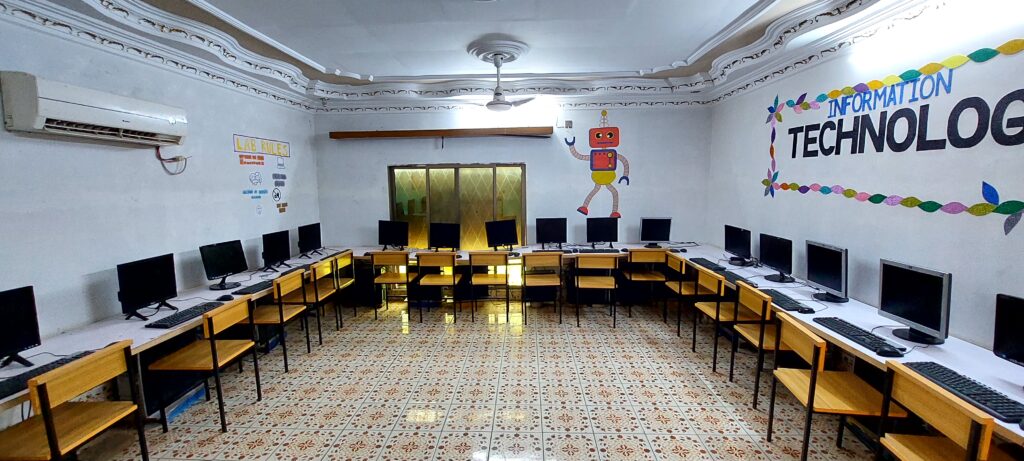
Computer Laboratory
Recognizing the importance of information technology in modern education, the college has established a Computer Laboratory to enhance digital literacy among ADE and B.Ed. (Honors) students. The lab provides trainees with practical experience in using computers and the internet, enabling them to effectively complete academic tasks, research, and classroom activities through technology.
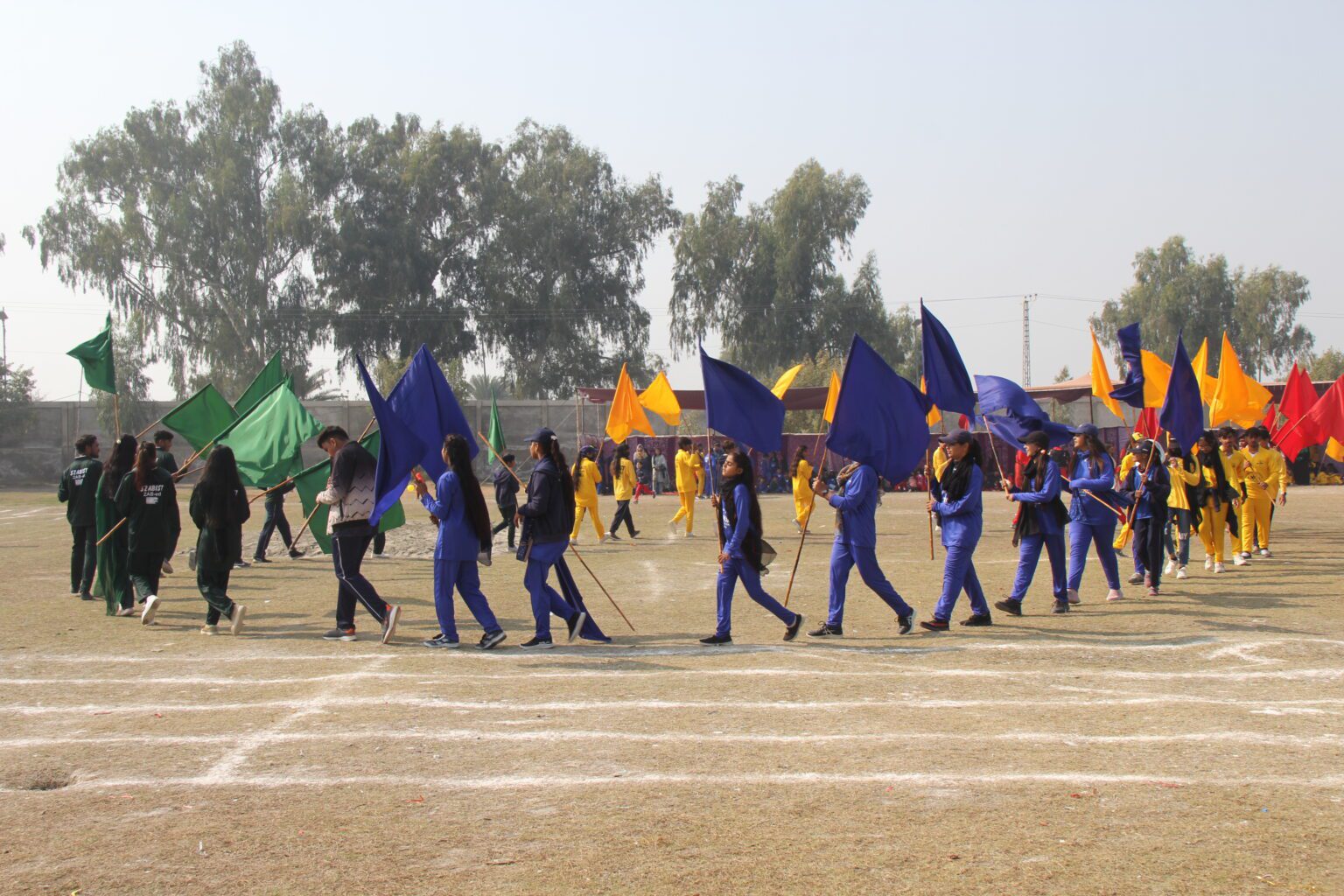
Co-Curricular Activites
Co-curricular activities are an essential part of education, contributing to the holistic development of students and complementing classroom learning. They provide opportunities for students to explore their interests, develop confidence, and showcase their talents beyond academics.
The college offers facilities such as a playground and a sports room to promote physical fitness and teamwork. Students actively participate in sports, athletics, debates, dramas, quizzes, music, Qirat, and Naat competitions, enhancing their personal growth and overall performance.